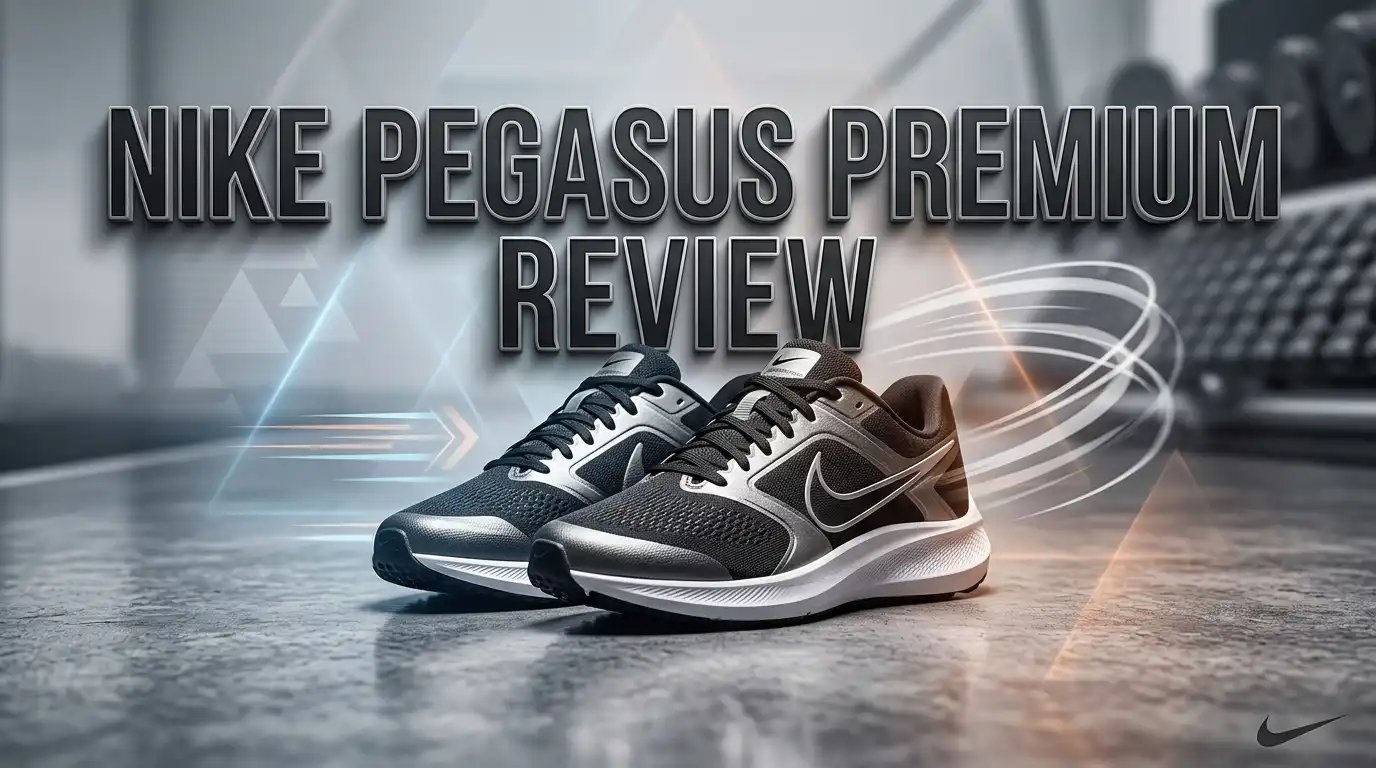
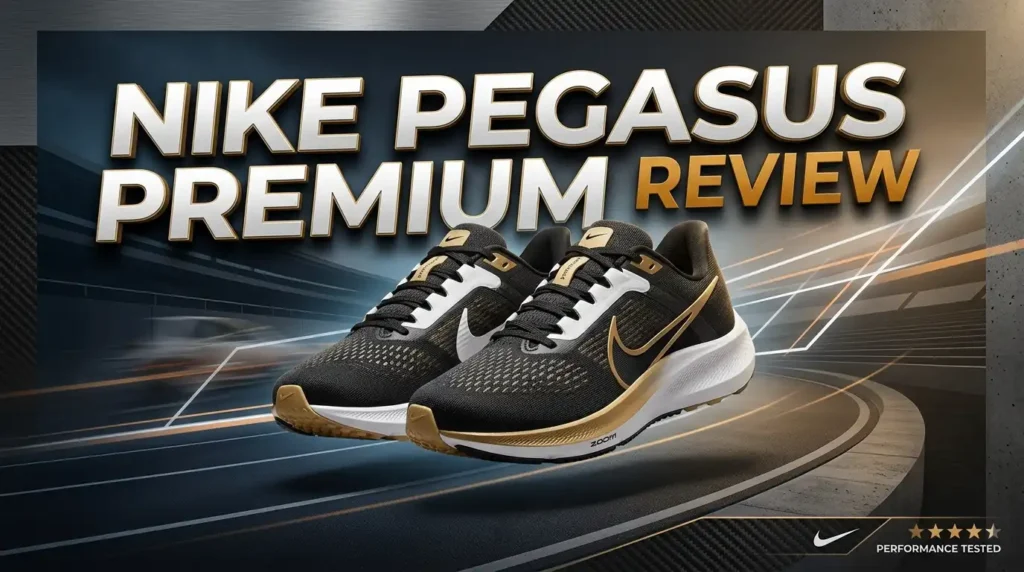
Nike Pegasus Premium Review 2026: Worth The Hype?
Are you looking for a running shoe that feels like a trampoline under your feet? The Nike Pegasus Premium has taken the running world by storm since its release.
It packs a triple stack of Nike’s most advanced cushioning tech into one bold package. But is it all hype, or does it truly deliver?
This review breaks down every detail you need to know before spending $210 on a pair. From the full-length Air Zoom unit to the narrow fit, I cover the good, the bad, and the surprising. If you want to know whether the Pegasus Premium belongs in your rotation, keep reading.
Key Takeaways
- The Nike Pegasus Premium uses a triple-layer midsole made of ZoomX foam, a full-length Air Zoom unit, and ReactX foam. This setup creates one of the bounciest rides in any daily trainer on the market right now.
- The shoe runs narrow. Lab measurements show a width of just 91.3 mm, and no wide sizes exist. Runners with wide feet should look at other options like the Adidas Adizero EVO SL or ASICS Superblast 2.
- At 10.9 oz (308g), it is heavier than most competitors. The Hoka Mach X 2 and ASICS Superblast 2 offer similar bounce in a lighter build.
- Breathability scored a perfect 5 out of 5 in lab testing. The knit upper with oversized ventilation holes keeps your feet cool during long runs.
- The $210 price tag is steep. You get high-end materials and cutting-edge tech, but some runners may find better value in shoes like the Nike Zoom Fly 6 or Nike Vomero 18.
- The shoe fits slightly small based on hundreds of user votes. Consider going half a size up if you fall between sizes.
What Is the Nike Pegasus Premium?

- Responsive Cushioning: Engineered for a responsive ride
- Triple Tech Stack: ZoomX, Air Zoom, ReactX for enhanced performance
Last update on 2026-07-04 / Affiliate links / Images from Amazon Product Advertising API
The Nike Pegasus Premium is a super trainer built for road running. Nike released it as the top-tier model in the Pegasus family. It sits above the standard Pegasus 41 and the Pegasus Plus in both price and technology.
This shoe stacks three layers of cushioning into a single midsole. You get ZoomX foam on top, a sculpted Air Zoom unit in the middle, and ReactX foam on the bottom. Nike calls it their most responsive Pegasus ever.
The shoe retails at $210, which puts it in direct competition with other super trainers from ASICS, Hoka, and New Balance. It works best for short to mid-distance training runs and everyday jogs where you want a fun, bouncy ride.
Nike Pegasus Premium Midsole and Cushioning
- Responsive Cushioning: Engineered for a responsive ride
- Triple Tech Stack: ZoomX, Air Zoom, ReactX for enhanced performance
Last update on 2026-07-04 / Affiliate links / Images from Amazon Product Advertising API
The midsole is the star of this shoe. Nike packed it with a 42.8 mm heel stack height, which is well above the average of 34.9 mm across running shoes. That is a massive amount of foam between your foot and the ground.
Shock absorption hit 155 SA in the heel and 136 SA in the forefoot during lab tests. For reference, the average running shoe scores around 130 SA. You feel this difference on every stride. The landing is soft, plush, and forgiving.
Energy return measured at 67.3%, which beats the average of 58.6%. It does not match super shoe territory, but that is expected. The ReactX layer adds durability at the cost of some bounce. The ZoomX layer sits closest to your foot and delivers that signature springy sensation Nike fans love.
The Full-Length Air Zoom Unit Explained
This is the feature that sets the Pegasus Premium apart from every other daily trainer. Nike placed a full-length Air Zoom unit between the ZoomX and ReactX foam layers. This is the first time Nike has used this technology in a running shoe.
Think of it as a stretched version of the Air Zoom pods from the Alphafly 3. Nike shaped the unit with a spoon-like geometry that replaces the need for a carbon plate. The result is a stiff, propulsive feel that pushes you forward.
Lab tests confirmed a stiffness score of 21.2N, which actually beats many carbon-plated super shoes. The Air Zoom unit creates a lively, high-bounce experience that feels different from anything else on the market. It is bold, it is innovative, and it genuinely works.
Top 3 Alternatives for Nike Pegasus Premium
1. ASICS Superblast 2 delivers similar energy return in a much lighter build. It uses FF Blast Turbo and FF Blast Plus cushioning for a bouncy, responsive ride. It also fits runners with average to wide feet better than the Pegasus Premium.

- Get ready to go the distance with this super-charged running shoe from Asics
- Synthetic upper
Last update on 2026-06-09 / Affiliate links / Images from Amazon Product Advertising API
2. Hoka Mach X 2 combines a PEBA midsole with a plastic plate for a snappy, rockered ride. It weighs significantly less than the Pegasus Premium and handles tempo runs with ease. The woven upper offers great breathability.

- Textile
- Polyurethane
Last update on 2026-07-04 / Affiliate links / Images from Amazon Product Advertising API
3. New Balance FuelCell SuperComp Trainer V3 features FuelCell foam with a carbon fiber Energy Arc system. It delivers strong propulsion for marathon training and speed work. The fit accommodates a wider range of foot shapes.

- FuelCell midsole foam with approximately 3% bio-based content delivers a propulsive feel to help drive you forward...
- Energy Arc pairs sport-specific carbon fiber plate geometry with strategic midsole voids, designed to increase stored...
Last update on 2026-07-04 / Affiliate links / Images from Amazon Product Advertising API
Nike Pegasus Premium Fit and Sizing
The fit is one of the most divisive aspects of this shoe. Lab measurements show a forefoot width of just 91.3 mm, which is well below the average of 95.1 mm. The toebox narrows down to 70.3 mm, giving it a race-like, tapered shape.
If you have narrow feet, this shoe will feel fantastic. The snug fit locks your foot in place and eliminates any sliding. But if you have average or wide feet, you will likely find the fit too tight.
Nike does not offer the Pegasus Premium in wide sizes. Hundreds of voters also confirmed the shoe runs slightly small. I recommend trying it on in person or ordering a half size up from your usual Nike size. The vertical toebox height of 29.1 mm is generous, so your toes get enough room to splay upward.
Upper Design and Breathability
The upper is one of the Pegasus Premium’s biggest strengths. Nike combined a knit material on top with mesh panels on the sides. The knit section wraps over your foot for a plush, sock-like feel. The mesh panels add structure and hold.
Breathability scored a perfect 5 out of 5 in smoke testing. The oversized ventilation holes in the toebox and tongue allow massive airflow. You can literally see your socks through the upper on some colorways.
Under a microscope, the knit shows a high-precision yarn layout that balances comfort with ventilation. Tongue padding measures 9.9 mm, which is nearly double the average for super trainers. This thick padding gives the shoe a cloud-like step-in feel that many runners love.
Weight and Its Impact on Performance
At 10.9 oz (308g) for a men’s size, the Pegasus Premium sits on the heavier side of the super trainer category. The average running shoe weighs about 9.3 oz (264g). That difference is noticeable during faster efforts.
The extra weight comes from the triple-layer midsole and the thick padding throughout the upper. Nike packed a lot of technology into this shoe. But it comes at the cost of agility and quickness.
During tempo runs, the shoe felt bottom-heavy and sluggish compared to lighter competitors. For easy jogs and recovery runs, the weight matters less. A future version at sub-10 oz would open up more training possibilities. Right now, the Pegasus Premium works best for easy to moderate pace efforts.
Outsole Traction and Durability
The outsole features a two-zone rubber layout with dense diamond-shaped lugs in the forefoot and heel. A sharp cutout runs through the center, exposing the Air Zoom unit and reducing overall weight.
Traction scored 0.49 in testing, which is decent but slightly below the average of 0.50. The shoe grips well on both dry and wet pavement. However, Nike’s rubber still trails behind brands like Adidas (with Continental rubber) and ASICS.
Outsole durability showed 1.0 mm of wear in testing, which matches the average. For a $210 shoe, you might expect better. The rubber thickness measures 3.2 mm, which is standard. Nike could slim the shoe down if they used more wear-resistant rubber compounds.
Stability and Support
The Pegasus Premium is a 100% neutral running shoe. It has no stability features, no medial post, and no guide rail. The narrow midsole platform of 108.6 mm in the forefoot makes it feel less stable than most super trainers.
Torsional rigidity scored 4 out of 5 thanks to the full-length Air Zoom unit. Without that stiff air structure, the tall stack would feel wobbly and unsafe. The heel counter stiffness hit a perfect 5 out of 5, locking your heel firmly in place.
The narrow midfoot can feel shaky for runners who need extra support. If you overpronate or need any form of stability guidance, this shoe is not for you. Neutral runners with good form will enjoy the playful, exciting ride.
Rocker Design and Ride Feel
The rocker on the Pegasus Premium is surprisingly mild. Most super trainers with a 42.8 mm stack use aggressive rocker geometry to push you forward. Nike took a different approach here.
The heel rocker is almost flat, which caught many testers off guard. This design makes the shoe feel better for walking and casual wear than a typical super trainer. But runners who rely on a heavy rocker for smooth transitions may feel disappointed.
The forefoot rocker is more pronounced and helps with toe-off. The overall ride feels fun, bouncy, and slightly unpredictable. It is not an autopilot shoe. You feel every stride, and the high stack combined with the narrow platform creates a rollercoaster-like sensation.
Cold Weather Performance
ZoomX foam is made from Pebax, which performs exceptionally well in cold conditions. Lab tests showed the midsole firmed up by only 8% after 20 minutes in a freezer. The average running shoe firms up by 23%.
This means the Pegasus Premium maintains its bounce and softness during winter runs. Many foam types lose their cushioning properties in cold weather. ZoomX resists this better than almost any competitor foam.
Nike also added 360-degree reflective elements to the upper. This is a useful safety feature for early morning or evening runs during shorter winter days. The reflective strips wrap around the entire shoe and remain visible from all angles.
Durability Concerns
Durability is a mixed bag with the Pegasus Premium. The toebox scored a disappointing 1 out of 5 in abrasion testing. Those large ventilation holes and soft knit material tear easily under stress.
On the flip side, the heel padding scored a perfect 5 out of 5 for durability. The thick padding resists wear and maintains its shape over time. The outsole durability is average at 1.0 mm of wear.
For $210, you might expect a shoe that lasts longer in every area. The toebox will likely show wear first, especially if you run on rough surfaces. The midsole foam should hold up well over 300 to 400 miles, but the upper may give out before that.
Who Should Buy the Nike Pegasus Premium?
This shoe works best for a specific type of runner. You should consider it if you have narrow feet and want a cloud-soft, bouncy ride. It also suits runners who love cutting-edge technology and do not mind paying a premium price.
The Pegasus Premium shines during easy runs, recovery jogs, and moderate-pace training. It also doubles as a lifestyle sneaker thanks to its flat rocker and stylish design. The 360-degree reflectivity is a nice bonus for low-light runners.
Skip this shoe if you have wide feet, need stability support, or plan to use it for speed work. The heavy weight and narrow platform limit its range. Runners on a budget will find better value in shoes like the Nike Vomero 18 or Zoom Fly 6.
Nike Pegasus Premium Price and Value
The Pegasus Premium retails at $210, which sits $57 above the average running shoe price of $153. That is a significant investment for a daily trainer that does not handle fast workouts well.
You get ZoomX foam, a full-length Air Zoom unit, ReactX foam, 360-degree reflectivity, and a premium knit upper. The materials are genuinely high-end. Nike did not cut corners on the internal components.
However, the narrow fit limits the audience, and the heavy weight restricts its speed range. Competing super trainers like the ASICS Superblast 2 and Hoka Mach X 2 offer lighter builds with similar or better energy return at comparable prices. The value depends on how much you prioritize that unique Air Zoom ride feel.
Final Verdict on the Nike Pegasus Premium
The Nike Pegasus Premium is a bold, innovative super trainer that pushes the boundaries of daily running shoe technology. The full-length Air Zoom unit is a game changer. The triple-layer midsole delivers incredible bounce and cushioning.
But the shoe has clear weaknesses. The narrow fit, heavy weight, and steep price limit who can truly benefit from it. The mild rocker also makes it less efficient than competitors with more aggressive geometry.
If the fit works for your feet and you value maximum cushioning with a fun ride, the Pegasus Premium delivers an experience unlike any other shoe. It is polarizing, it is expensive, and it is genuinely exciting. Nike took a risk with this one, and for the right runner, it pays off.
Frequently Asked Questions
Is the Nike Pegasus Premium true to size?
The Pegasus Premium runs slightly small based on user feedback and lab measurements. The narrow width of 91.3 mm and tapered toebox of 70.3 mm make it feel tighter than most Nike shoes. I recommend going half a size up if you fall between sizes or have average-width feet.
Can I use the Nike Pegasus Premium for long runs?
Yes, the massive 42.8 mm heel stack and plush ZoomX foam make it suitable for long runs. The cushioning absorbs impact well, and the ZoomX performs great even in cold weather. However, the 10.9 oz weight may feel heavy during runs over 15 miles.
How does the Nike Pegasus Premium compare to the Pegasus 41?
The Pegasus Premium is a significant upgrade over the Pegasus 41. It uses ZoomX foam and a full-length Air Zoom unit instead of standard ReactX foam. The Premium has a much taller stack (42.8 mm vs 37 mm), more bounce, and better breathability. It also costs $70 more at $210 vs $140.
Is the Nike Pegasus Premium good for walking?
Yes, the flat rocker design makes it surprisingly comfortable for walking. The thick cushioning and plush upper padding create a luxury feel for casual wear. Many buyers use it as both a running shoe and a lifestyle sneaker.
Does the Nike Pegasus Premium come in wide sizes?
No, Nike does not offer the Pegasus Premium in wide sizes. The shoe runs narrow across the board. Runners with wide feet should consider alternatives like the ASICS Superblast 2 or New Balance FuelCell SuperComp Trainer V3, which offer more room.
How many miles can the Nike Pegasus Premium last?
The midsole should maintain its cushioning properties for approximately 300 to 400 miles. However, the soft knit upper may show wear earlier, especially in the toebox area. The outsole durability is average, with standard rubber wear over time.

Sara is a passionate lifestyle enthusiast and product researcher with over 5 years of experience in fashion, beauty, and wellness industries. With a keen eye for quality and a commitment to honest reviews, Sara has helped thousands of readers make smarter purchasing decisions. When she’s not testing the latest products, you can find her exploring new trends and sharing her discoveries with the Smart Selects community.