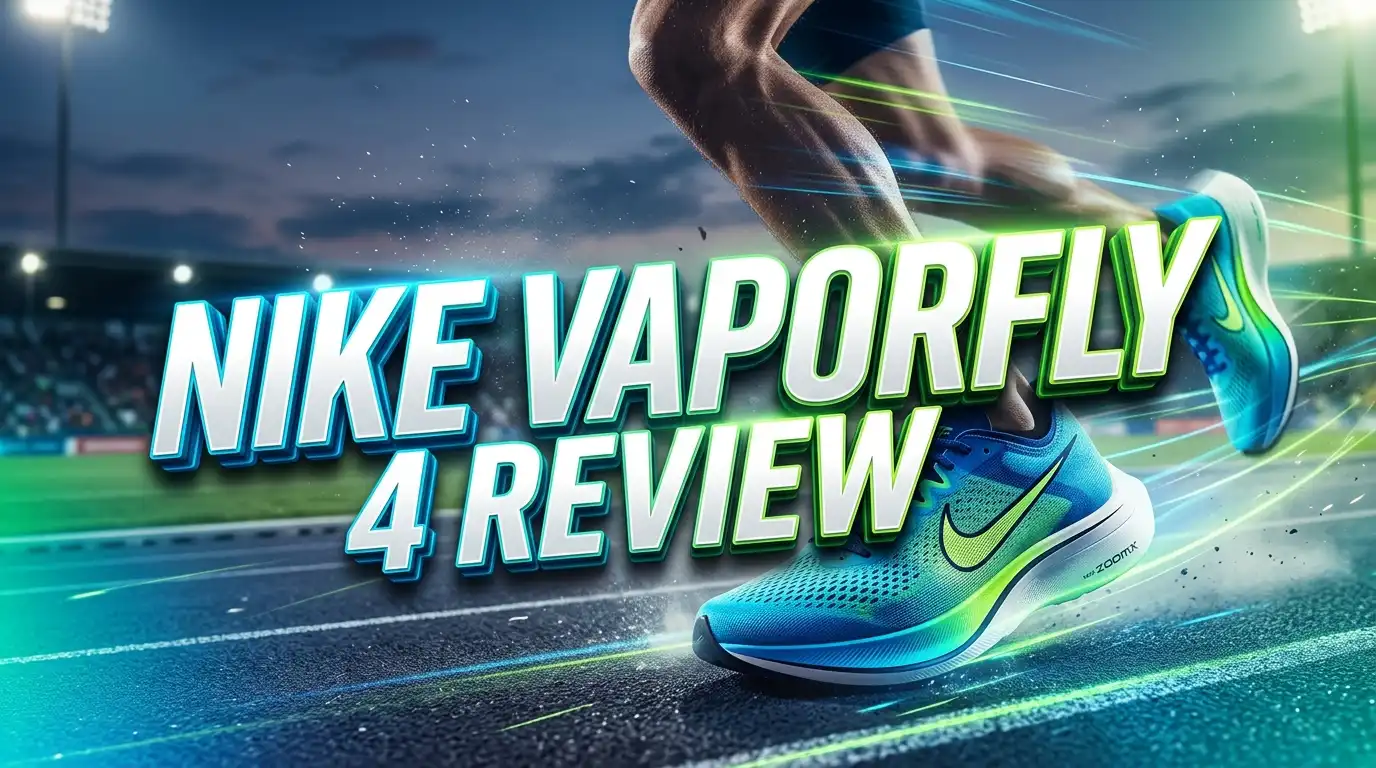
Nike Vaporfly 4 Review 2026: Best Carbon Racing Shoe?
If you are a runner chasing your next personal best, the Nike Vaporfly 4 deserves your full attention. This shoe rewrites the rules of what a carbon plated super shoe can do. It is lighter, snappier, and faster than its predecessor in almost every way.
But does it live up to the hype? Is it worth the $260 retail price? And how does it compare to the Alphafly 3 and other super shoes on the market? I put the Vaporfly 4 through extensive testing to find out.
In this review, I break down every aspect of this shoe, from cushioning and fit to durability and traction. Whether you are a competitive racer or a weekend warrior looking for your first super shoe, this review will help you decide if the Nike Vaporfly 4 belongs in your race day rotation.
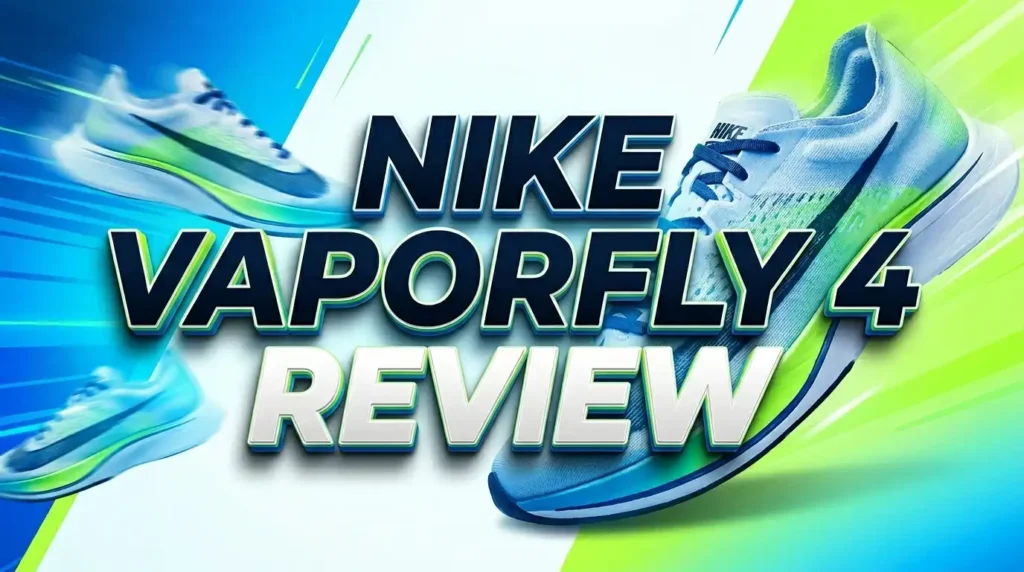
Key Takeaways
- The Nike Vaporfly 4 weighs just 166g (5.9 oz), making it roughly 13% lighter than the Vaporfly 3. This is one of the lightest carbon plated racing shoes you can buy right now. The weight savings come from a hollowed out midsole, a thinner upper, and a slightly reduced stack height.
- Energy return reaches an outstanding 78.1%, which puts this shoe among the top performers ever tested. The ZoomX foam and updated Flyplate work together to deliver a bouncy, propulsive toe off that you can feel with every stride.
- The heel stack sits at 34.1 mm, a reduction from the Vaporfly 3. Nike lowered the shoe to make it more agile for shorter races. This makes it ideal for 5K through half marathon distances, though lightweight runners can still use it for the full marathon.
- Fit runs true to size but slightly narrow at the widest part of the foot. The toebox measures 91.7 mm wide, which is about 2.6 mm snugger than the previous version. Runners with wider feet may want to try the shoe before buying.
- Retail price is $260, keeping it in line with other premium super shoes. You can often find it on sale at significant discounts. For the technology you get, this shoe offers strong value.
- Durability has improved in the toebox area (rated 4 out of 5), but the heel outsole remains a weak point. This shoe is built for race day and key workouts, not daily training miles.
Nike Vaporfly 4: What Makes This Shoe Special?

- Nike Vaporfly 4 Men's Road Racing Shoes
- Men to Women Sizing
Last update on 2026-09-04 / Affiliate links / Images from Amazon Product Advertising API
The Nike Vaporfly 4 is the fourth generation of the shoe that started the carbon plate running revolution. Nike originally launched the Vaporfly concept back in 2017. That shoe changed professional and recreational racing forever.
The Vaporfly 4 builds on that legacy with some bold changes. Nike reduced the midsole volume and lowered the stack height. This goes against the industry trend of building taller and taller super shoes. The result is a shoe that feels more connected to the ground while still delivering elite level propulsion.
At its core, the shoe uses full length ZoomX foam and a carbon fiber Flyplate. These two components create the signature Vaporfly feel: lightweight, bouncy, and fast. The foam absorbs impact, and the plate converts that energy into forward motion.
What sets the fourth version apart is the hollowed out midsole, borrowed from the Alphafly 3 design. This is the main reason the shoe sheds so much weight. It also gives the Vaporfly 4 a unique look with visible cutouts in the midsole.
ZoomX Foam and Carbon Flyplate Performance
The midsole of the Nike Vaporfly 4 uses 100% ZoomX foam, which is Nike’s most responsive cushioning material. ZoomX is made from Pebax, a material known for excellent energy return and light weight.
Lab tests show the Vaporfly 4 delivers 78.1% energy return, well above the average of 58.6% for running shoes. This means you get back more energy with each footstrike. You can feel this as a bouncy, springy sensation during fast running.
The carbon fiber Flyplate runs from heel to toe. It sits between two layers of ZoomX foam. Nike slightly adjusted the plate shape in this version. The Flyplate now curves more through the midfoot and forefoot. This creates a more dramatic spoon shape that enhances the lever effect during toe off.
The foam feels slightly firmer than the Vaporfly 3. Nike made this choice on purpose. The reduced stack height means less foam, so a firmer tune prevents heavier runners from bottoming out. The softness rating of 34.7 AC places it in a balanced sweet spot, neither too soft nor too firm.
Weight: The Biggest Improvement
This is where the Nike Vaporfly 4 truly shines. The shoe weighs just 166g (5.9 oz) in a men’s US 10. That is a 13% weight reduction from the Vaporfly 3. In the super shoe category, every gram matters on race day.
Nike achieved this weight drop through three main changes. First, the hollowed out midsole removes material from the center without sacrificing performance. This is the biggest contributor to the weight savings.
Second, the upper and tongue received a complete rework. The tongue is now paper thin with a small foam pad only where the laces sit. The upper mesh is thinner and lighter while still keeping structure.
Third, the lower stack height means less foam overall. The heel dropped from 37 mm to 34.1 mm. Less material equals less weight. It is a simple but effective approach.
For comparison, most competing super shoes weigh between 6 and 7 ounces. The Vaporfly 4 sits at the lighter end of that range. If you want the lightest possible race shoe, this one delivers.
Top 3 Alternatives for Nike Vaporfly 4

- Maximum Race-Day Speed with Carbon Plate – Designed for elite performance, the Saucony Endorphin Pro 4 uses SPEEDROLL...
- Super Responsive Dual-Foam Cushioning – Features the advanced PWRRUN HG + PWRRUN PB midsole for exceptional energy...
Last update on 2026-09-13 / Affiliate links / Images from Amazon Product Advertising API

- The ASICS Metaspeed Sky Paris sneakers feature FF TURBO PLUS midsole improves compression and helps provide more energy...
- Recycled polyester and mesh lining.
Last update on 2026-09-04 / Affiliate links / Images from Amazon Product Advertising API

- Regular fit
- Lace closure
Last update on 2026-09-04 / Affiliate links / Images from Amazon Product Advertising API
Fit and Sizing: What to Expect
The Nike Vaporfly 4 fits true to size based on testing and user feedback. If you wear a size 10 in your daily trainers, order a size 10 in the Vaporfly 4. No need to size up or down.
However, the shoe is slightly narrower than its predecessor. The widest part of the foot measures 91.7 mm, compared to 94.3 mm in the Vaporfly 3. This is a difference of about 1.3 mm per side. Most runners will not notice this change. But if the Vaporfly 3 already felt tight, you may want to explore wider options.
The toebox width at the big toe measures a generous 73.2 mm. This provides enough room for your toes to splay during long runs. The toebox height sits at 27.3 mm, which is similar to most daily trainers. You should not experience any pressure points or black toenails with the correct size.
The midfoot lockdown is secure thanks to the engineered mesh upper. Nike did not use Flyknit on this model. The mesh provides a snug, race ready feel without excessive stretch. Overall, the fit is dialed in for speed.
Cushioning and Ride Feel
The cushioning in the Vaporfly 4 varies between the heel and forefoot. The heel delivers outstanding shock absorption, measuring 137 SA in lab tests. This means heel strikers get plenty of protection during long races.
The forefoot tells a different story with just 94 SA. This gives a more direct, ground connected feel that is ideal for fast paced racing. Forefoot strikers will appreciate the responsive, snappy sensation at toe off.
The heel to toe drop measures 8.6 mm in independent lab testing, slightly higher than Nike’s claimed 6 mm. Still, this is lower than the Vaporfly 3’s measured 11.1 mm drop. The flatter profile makes the shoe comfortable for all footstrike patterns.
The ride feels balanced and smooth. The two layers of ZoomX foam have similar softness levels, creating a consistent underfoot sensation. The carbon plate bends at the first metatarsal, creating a natural lever point that assists your stride without feeling forced.
Outsole and Traction
The outsole of the Vaporfly 4 received a meaningful redesign. Nike removed the cutouts found in the Vaporfly 3 and returned to a more continuous rubber coverage pattern. This approach mirrors the design language of the Vaporfly 1 and 2.
Traction testing produced a score of 0.45, which is decent for a super shoe. This is slightly lower than the Vaporfly 3. On wet roads, the shoe maintains adequate grip to keep you confident during rainy race conditions.
The forefoot uses blown rubber in high wear areas. This provides a good balance between grip and weight savings. The material is softer than traditional outsole rubber, which helps cushion forefoot landings.
The heel outsole borrows design elements from the Alphafly 3. It uses a stripped back layout with soft material. This is the weakest area for durability. Heel strikers will see faster wear in this section. For a race day shoe with limited mileage, this is an acceptable trade off.
Breathability and Upper Design
Nike took a fresh approach to the Vaporfly 4 upper. The previous version used large ventilation holes similar to the Brooks Hyperion Elite 4. This version skips that strategy entirely.
The new upper uses an engineered mesh that combines thick structural yarns with ultra thin, nearly transparent material. Under a microscope, you can see how these elements bond together. The result is a lightweight yet durable upper.
Breathability rates a solid 4 out of 5. Air flows evenly across the toebox and midfoot areas. This is great for runners who tend to overheat around the arch. Most marathon and half marathon conditions involve cool or breezy weather, so this level of ventilation is more than enough.
The upper does not use Flyknit or Atomknit. It sacrifices some stretch and softness for a firmer, more secure fit. This is a deliberate choice for a race day shoe where lockdown matters more than plush comfort.
Stability: How Does It Handle?
Stability has never been the Vaporfly’s strongest feature, and the fourth version continues that trend. The shoe has a narrow heel base of just 77.0 mm. This is extreme for a super shoe and gives it a track spike like feel.
The forefoot platform is slightly wider at 110.6 mm. This provides a more stable base for toe off. Nike added 3 mm of width compared to the Vaporfly 3, which helps with overall balance.
The reduced stack height does help with stability. A lower shoe means less distance between your foot and the ground. This gives you better proprioception and a more grounded feel compared to taller super shoes.
Torsional rigidity scores 4 out of 5 despite the carbon plate. The shoe is not as stiff as some competitors prefer. This makes it more approachable for recreational racers but may leave elite runners wanting a stiffer, more aggressive setup.
Durability: Will It Last?
The durability of the Vaporfly 4 shows real improvement in some areas. The toebox jumped from a disappointing 1 out of 5 in the Vaporfly 3 to an impressive 4 out of 5 in this version. The new upper design is much tougher without adding weight.
Heel padding durability scores a solid 3 out of 5. The padding is fully exposed with no external reinforcement, so this average score is actually quite good for a super shoe.
The outsole is the weakest link. Lab testing showed 4.6 mm of wear in the forefoot and a concerning 8.6 mm in the heel. These numbers look alarming, but real world performance is less dramatic. The soft outsole material does not wear as aggressively during actual running as it does in standardized tests.
Most runners will get 100 to 200 miles of race quality performance from the Vaporfly 4. This is standard for a premium carbon plated super shoe. Save it for races and key workouts to maximize its lifespan.
Price and Value
The Nike Vaporfly 4 retails at $260, which places it squarely among premium racing shoes. This price is consistent with the Vaporfly 3 and comparable to competitors like the ASICS Metaspeed Sky and the Adidas Adizero Adios Pro 4.
- Nike Vaporfly 4 Men's Road Racing Shoes
- Men to Women Sizing
Last update on 2026-09-04 / Affiliate links / Images from Amazon Product Advertising API
For your money, you get Nike’s best ZoomX foam, a full length carbon Flyplate, and one of the lightest builds in the category. The technology and performance justify the price for serious racers.
The good news is that discounts are common. Retailers frequently offer 30% to 55% off the retail price during sales events. At those reduced prices, the Vaporfly 4 becomes an exceptional deal.
If $260 is too steep, consider the Saucony Endorphin Pro 4 at around $200. It offers carbon plated performance at a more accessible price. But for the absolute best lightweight racing experience from Nike, the Vaporfly 4 delivers premium value.
Who Should Buy the Nike Vaporfly 4?
The Vaporfly 4 is ideal for several types of runners. If you are a lightweight runner under 65 kg (male) or 55 kg (female), this shoe will work beautifully across all distances. The lower stack provides just enough cushioning without adding bulk.
Runners who focus on 5K, 10K, and half marathon races will find this shoe at its best. The lightweight build and snappy ride excel at faster paces. The lower profile gives you a more agile, responsive feel compared to taller super shoes.
If you felt the Vaporfly 3 was underwhelming, version 4 addresses those concerns. The updated geometry, improved energy return, and dramatic weight savings make this feel like a genuine upgrade.
Runners who prefer a more grounded ride over the tall, bulky feel of modern super shoes will love this shoe. It sits lower to the ground and promotes a natural footstrike pattern.
Who Should Skip the Nike Vaporfly 4?
The Vaporfly 4 is not for everyone. Heavier runners may find the cushioning insufficient for marathon distances. The reduced stack height means less foam underfoot. If you weigh over 75 kg, a shoe like the Nike Alphafly 3 or the ASICS Metaspeed Sky with more foam may serve you better.
Runners with wide feet should approach with caution. The 91.7 mm width is narrow. If you need extra room, look at the New Balance FuelCell SuperComp Elite v4 or other wider options.
If you need a daily training shoe, the Vaporfly 4 is not the answer. Its outsole durability limits it to race day and speed workouts. For daily miles, pair it with a dedicated trainer like the Nike Pegasus or Saucony Endorphin Speed.
Budget conscious runners may also want to wait for a sale. At full retail, $260 is a significant investment for a shoe with limited mileage. Sales often bring it below $180, which represents better value.
Nike Vaporfly 4 vs Alphafly 3: Quick Comparison
This is the most common question runners ask. Both shoes use ZoomX foam and a carbon plate. But they serve different purposes.
The Vaporfly 4 weighs 166g. The Alphafly 3 weighs around 215g. That is a significant difference you can feel on your feet. The Vaporfly is the lighter, faster option for shorter distances.
The Alphafly 3 has a higher stack at around 39 mm in the heel versus 34.1 mm in the Vaporfly 4. This extra foam gives the Alphafly better cushioning for marathons, especially for heavier runners.
The Alphafly 3 has a wider heel base at 91.9 mm versus 77.0 mm. This makes the Alphafly more stable and forgiving. Heel strikers generally prefer the Alphafly for this reason.
Choose the Vaporfly 4 for 5K through half marathon. Choose the Alphafly 3 for full marathon and beyond. If your budget allows, owning both gives you the perfect one two punch for any race distance.
Frequently Asked Questions
Is the Nike Vaporfly 4 good for beginners?
The Vaporfly 4 can work for beginners, but it is built for experienced runners with an efficient stride. Newer runners may benefit more from the Alphafly 3 for shorter races because it offers a wider, more stable platform. If you are new to carbon plated shoes, the Saucony Endorphin Pro 4 is a more forgiving entry point.
How many miles can I get from the Nike Vaporfly 4?
Most runners report getting 100 to 200 miles of race quality performance from the Vaporfly 4. The foam and plate will gradually lose their responsiveness beyond that range. Reserve this shoe for races and key speed workouts to extend its usable life.
Does the Nike Vaporfly 4 run true to size?
Yes, the Vaporfly 4 runs true to size. Order your normal running shoe size. The fit is slightly narrower than the Vaporfly 3 at the midfoot, but the toebox offers adequate room. Runners with very wide feet may want to try the shoe on before purchasing.
Is the Vaporfly 4 legal for races?
Yes, the Nike Vaporfly 4 is fully legal under World Athletics rules. The heel stack height of 34.1 mm falls well within the 40 mm limit for road racing shoes. Nike even added measurement marks on the midsole to show compliance with the rules.
Can I use the Vaporfly 4 for a marathon?
Yes, but it depends on your body weight and running style. Lightweight runners under 65 kg can use the Vaporfly 4 for marathons with great results. Heavier runners may prefer a shoe with more foam, like the Nike Alphafly 3 or the ASICS Metaspeed Sky, for the extra cushioning over 26.2 miles.
What is the difference between Vaporfly 4 and Vaporfly 3?
The Vaporfly 4 is 13% lighter, has a lower stack height, delivers better energy return (78.1% vs previous version), and features improved toebox durability. The midsole has a hollowed out center borrowed from the Alphafly 3 design. The upper and tongue are completely redesigned for weight savings. The Vaporfly 4 is a meaningful upgrade in almost every performance metric.

Sara is a passionate lifestyle enthusiast and product researcher with over 5 years of experience in fashion, beauty, and wellness industries. With a keen eye for quality and a commitment to honest reviews, Sara has helped thousands of readers make smarter purchasing decisions. When she’s not testing the latest products, you can find her exploring new trends and sharing her discoveries with the Smart Selects community.