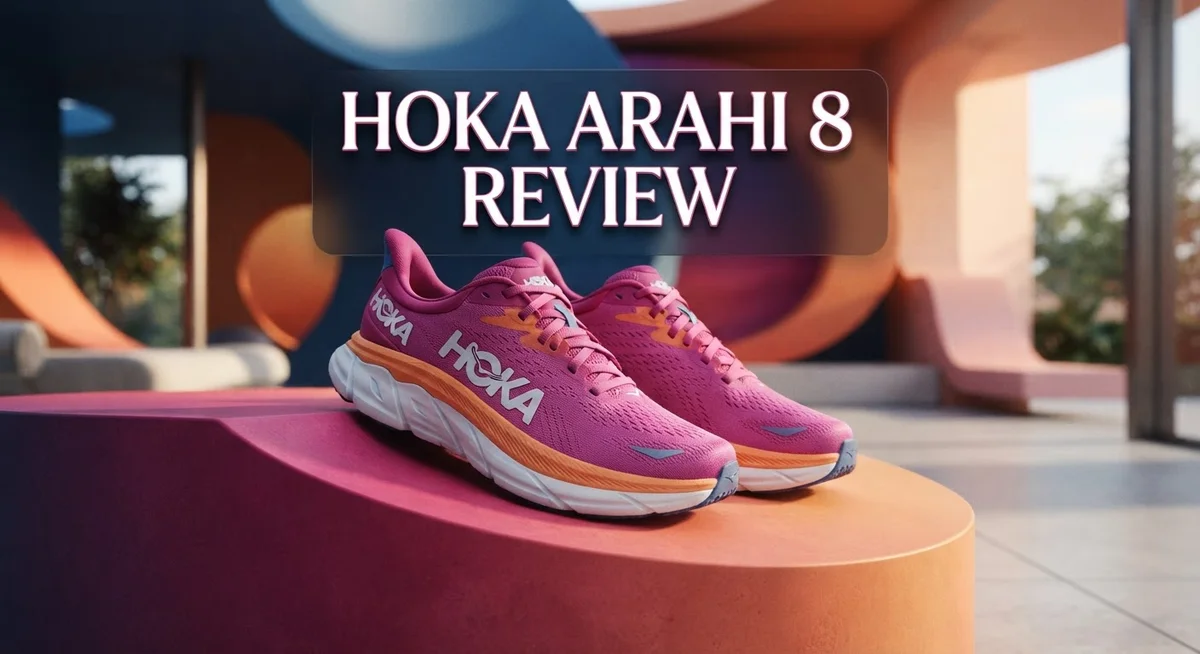
Hoka Arahi 8 Review: Should You Try This?
Do you need a shoe that supports your stride without weighing you down? The Hoka Arahi 8 might be your answer.
This shoe brings stability to runners who need extra support. It uses H Frame technology to fight overpronation. Your feet stay guided with every step you take.
Lightweight design meets strong cushioning in this model. The dual density EVA foam absorbs shock well. You get a smooth ride that feels comfortable on long runs.
Hoka improved the fit in this version too. The Arahi 8 offers a wider toe box than earlier models. Your toes get room to move naturally.
We tested this shoe to bring you real answers. This review covers everything from performance to comfort. You will learn if the Arahi 8 fits your running needs.
Let’s break down what makes this stability shoe stand out.
In a Nutshell
- H-Frame technology sits at the core of this shoe. It fights overpronation and keeps your stride steady on every run.
- The dual density EVA cushioning gives you a smooth ride. Your feet feel protected mile after mile.
- A podular outsole design breaks the sole into sections. This helps the shoe flex naturally with your foot.
- The tall stack height and higher drop create a unique feel underfoot. Some runners love it. Others find the ride a bit slower than expected.
- Arch support stays minimal in this model. If you need heavy arch support, you may want extra insoles.
- The tongue is non-gusseted. This means it can shift slightly during long runs.
- Outsole durability gets mixed reviews. Some users report faster wear in high impact areas.
Build and Materials
The Hoka Arahi 8 uses a double jacquard mesh upper that stands out for its durability. This material resists wear and tear better than standard mesh found on many stability shoes. You get a upper that holds up through miles of running.
The H-Frame stabilizing technology forms the backbone of this shoe’s support system. This feature prevents overpronation by guiding your foot through each stride. It works without feeling restrictive or clunky.
Cushioning comes from dual density compression molded EVA. This setup absorbs impact smoothly while keeping the shoe responsive. You won’t feel like you’re running on a cloud, but you will feel protected.
The outsole uses super abrasion rubber paired with a podular outsole design. The podular system breaks the sole into separate sections. This approach improves flexibility and ground contact. However, some runners report that outsole durability doesn’t match the upper’s quality. The sole may show wear faster than you’d expect.
The tall stack height and higher drop create a unique platform underfoot. This geometry suits runners who prefer a lifted, cushioned feel. The elevated heel also aids the anti-pronation support.
One weakness appears in the upper construction. Users report the insole feels flimsy in places. The non-gusseted tongue also lacks the reinforcement found on premium models. This means the tongue may shift during runs. You might need to adjust it occasionally.
Arch support stays minimal throughout the shoe. This works fine for mild to moderate overpronation, but severe pronators may need more. The shoe focuses on guiding your stride rather than cradling your arch.
Overall, the materials deliver a lightweight shoe that doesn’t sacrifice cushioning. The upper durability impresses, though the outsole and insole construction have room for improvement. The H-Frame technology provides genuine stability without added bulk. Build quality feels solid where it matters most, but some details feel less refined than competitors at this level.

Last update on 2026-09-04 / Affiliate links / Images from Amazon Product Advertising API
Stability and Support Technology
The stability features in the Hoka Arahi 8 work together to prevent your foot from rolling inward excessively. H-Frame technology forms the cornerstone of this support system. This framework guides your foot through each stride without forcing an unnatural motion.
The shoe handles mild to moderate overpronation effectively. Your foot stays aligned without feeling locked down or rigid. Many runners appreciate this balanced approach to stability.
Dual density cushioning plays a second role in support. The compression molded EVA layers absorb impact while keeping your foot stable. This combination lets you move naturally while staying protected.
The podular outsole design breaks the sole into distinct sections. Each pod responds independently to your foot’s movement. This flexibility prevents the shoe from feeling stiff or clunky during transitions.
However, the Hoka Arahi 8 has some stability limitations you should know. Arch support stays minimal throughout the shoe. If you need significant arch reinforcement, this model may disappoint you. The medial (inner side) stability feels less pronounced compared to some competitors.
The upper construction raises concerns for some wearers. The material feels somewhat flimsy in certain areas. The tongue lacks a gusset, so it slides sideways during runs. This can affect how the shoe holds your foot in place.
The tall stack height and higher drop create a unique platform. This geometry helps with forward propulsion but may feel unfamiliar at first. Your ankle sits higher off the ground than in traditional trainers.
Outsole durability gets mixed feedback from real users. Some runners report the rubber wears quickly. Others find it holds up well with normal training. Your mileage and running surface will determine longevity.
The Hoka Arahi 8 shines for runners seeking stability without heaviness. The H-Frame technology and dual density cushioning deliver reliable support. Just remember that arch support remains light, and the upper construction could be stronger. This shoe works best for runners with mild overpronation who value smooth, responsive rides.
Comfort and Fit
The Hoka Arahi 8 delivers a fit that feels spacious compared to earlier versions. The shoe offers a wider platform that accommodates runners with fuller feet or those who prefer extra room across the midfoot. This expanded fit works well for people who find standard stability shoes too snug.
The double jacquard mesh upper breathes well during runs. Your foot stays cool even on warm days. The mesh stretches slightly, which helps the shoe adapt to your foot’s natural shape as you move.
Comfort comes from the dual density EVA cushioning, which absorbs impact smoothly without feeling mushy. You get a responsive feel underfoot that doesn’t sink too much with each stride. The tall stack height creates a bouncy sensation that many runners enjoy, though some find it takes time to adjust.
The non-gusseted tongue can shift during runs. Some wearers report that the tongue slides to one side, which creates minor irritation. If you have sensitive feet, you might want to check this before committing to long distances.
The insole feels thin in some user reports. This means you have less cushioning directly under your arch. If you need substantial arch support, you may want to swap in aftermarket insoles for better comfort.
The wider fit doesn’t mean loose. The H-Frame technology holds your foot securely in place without creating pressure points. Your heel stays locked in the back, and the midfoot feels snug enough to prevent sliding.
Break-in time remains short with the Arahi 8. Most runners feel comfortable right away. The shoe doesn’t require extensive wearing to feel natural on your feet.
Comfort really shines during steady runs and easy recovery days. The shoe feels less responsive during speed work, which some runners view as a drawback. Overall, the Arahi 8 prioritizes a smooth, forgiving ride over a quick, snappy feel. This makes it an excellent choice for runners who value cushioning and stability together.
Top 3 Alternatives
ASICS Gel-Kayano

- Engineered mesh upper: A lightweight, breathable mesh material that reduces the need for additional overlays.
- Knit heel pull tab: This comfortable heel tab makes the shoe easier and more comfortable to put on and take off.
Last update on 2026-09-04 / Affiliate links / Images from Amazon Product Advertising API
The ASICS Gel-Kayano offers excellent stability for runners who need extra support. This shoe uses gel cushioning technology to absorb impact effectively. The midsole provides firm support without feeling stiff or uncomfortable.
The upper fits snugly around your midfoot and heel. You get a secure lockdown that keeps your foot stable during long runs. The breathable mesh helps your feet stay cool and dry.
Brooks Adrenaline GTS

- THIS WOMEN’S SHOE IS FOR: The Adrenaline GTS 25 is perfect for runners and walkers seeking reliable support and a...
- GUIDERAILS HOLISTIC SUPPORT SYSTEM: Our innovative technology - known as “GTS” for “Go-To Support” - supports...
Last update on 2026-08-25 / Affiliate links / Images from Amazon Product Advertising API
Brooks Adrenaline GTS combines comfort with reliable guidance. This shoe features DNA Loft v2 cushioning that feels soft underfoot. The GuideRails technology keeps your foot aligned naturally as you run.
The fit is roomier than many stability shoes. Your toes have enough space to spread out comfortably. The heel counter is padded well and prevents slipping during turns or hill runs.
New Balance 860

- FRESH FOAM X CUSHIONING - Our most cushioned Fresh Foam experience delivers incredible, premium underfoot comfort that...
- STABILITY PLANE TECHNOLOGY - Innovative Stability Plane provides dependable performance and stability support without...
Last update on 2026-09-04 / Affiliate links / Images from Amazon Product Advertising API
New Balance 860 delivers consistent support and cushioning. This shoe uses Fresh Foam technology for a responsive feel. The medial post provides stability exactly where your foot needs it most.
The shoe has a wider toe box compared to similar models. This extra room reduces pressure on your toes and bunions. The upper material is durable and molds to your foot shape over time.
All three shoes work well for runners seeking stability. Each one has its own feel and fit characteristics. Try them on to see which one matches your foot shape best. Your running style and foot structure matter most when choosing between these options.
Cushioning and Ride Quality
The Hoka Arahi 8 delivers a smooth, cushioned ride that feels responsive without being jarring. The dual density compression molded EVA works hard to absorb impact as your foot strikes the ground. You get shock protection that doesn’t feel overly soft or mushy.
The ride quality sits somewhere between plush and responsive. This means the shoe performs well during steady-paced runs and recovery days. The tall stack height gives you a floating sensation, though some runners find this slower compared to lower profile shoes.
One key aspect of the ride comes from how the shoe’s geometry works. The higher drop creates a natural forward lean that helps propel you through each stride. This geometry suits runners who prefer a smoother transition from heel to toe.
The cushioning feels consistent across the midsole. You won’t experience sudden soft spots or hard patches underfoot. The EVA material maintains its feel mile after mile without rapid breakdown.
However, the ride does have a trade off. Some runners report that the cushioning feels a bit sluggish during faster workouts. If you love snappy, energetic shoes, the Arahi 8 might feel heavy by comparison.
The outsole contributes to the overall ride quality too. The podular design breaks the sole into sections that flex independently. This allows your foot to move naturally without rigid resistance. Super abrasion rubber provides grip, though durability feedback suggests the outsole may wear faster than expected.
The shoe excels for runners seeking comfort over speed. Long easy runs feel pleasant and supported. Your legs experience less fatigue because the cushioning absorbs pounding effectively.
The ride quality remains consistent whether you run on roads or light trails. The shoe handles varied surfaces without feeling unstable. The H-Frame technology works quietly in the background, preventing excessive motion without forcing your foot into an unnatural position.
Overall, the Arahi 8 prioritizes a comfortable, protective ride that favors distance and recovery work over racing performance.
Durability and Outsole Performance
The Hoka Arahi 8 uses a super abrasion rubber outsole designed to handle road surfaces. This material choice matters because it balances grip with longevity. The podular outsole design breaks the sole into distinct sections, which allows flex in different areas of your foot. This approach helps the shoe adapt to various running surfaces.
Real runners report mixed results with outsole wear. Some users notice the rubber wears down faster than expected, especially on high mileage weeks. Others report solid performance over several hundred miles. The variation suggests your running style and surface choice play big roles in how long the outsole lasts. Heavier strikers may see faster wear than lighter runners.
The outsole’s geometry contributes to overall durability too. The tall stack height sits higher off the ground, which means the rubber makes less direct contact with pavement in some areas. This can actually extend the life of key wear zones like the heel and forefoot. However, the higher platform also means any outsole damage becomes more noticeable.
The upper construction raises some durability concerns. The double jacquard mesh feels breathable and light, but some wearers report the material shows wear faster than expected. The non-gusseted tongue can shift during runs, potentially causing friction that weakens the upper over time. The insole also feels thin in user reports, which may affect long-term structural support.
For runners planning high mileage, the Hoka Arahi 8 requires honest evaluation. The outsole performs adequately for moderate training, but it may not match the durability of some competitors. You might need replacements sooner if you log 40 plus miles weekly.
The shoe shines best for runners doing steady-paced work and recovery runs. This use case puts less stress on the outsole and upper materials. If you rotate this shoe with others in your collection, durability becomes less of a concern. The Arahi 8 works well as a secondary trainer rather than your only shoe.
Pros and Cons
Pros
- Lightweight construction paired with strong shock absorption makes this shoe feel responsive without excess weight
- H-Frame™ technology delivers mild-to-moderate anti-pronation support without adding bulk
- Wider fit compared to earlier Arahi versions gives your foot room to breathe and move naturally
- Double jacquard mesh upper resists wear and tears through heavy training cycles
- Short break-in period means comfort arrives from your first run
Cons
- Medial stability feels less pronounced than some competitors, which matters if you need stronger support
- Outsole durability shows inconsistent results across user reports, particularly with high mileage runners
- Tongue lacks a gusset and can shift during your run, causing minor fit frustrations
- Minimal arch support and thin insole construction may disappoint runners needing extra foot structure
Who Should Buy It
The Hoka Arahi 8 works best for runners who prioritize comfort and stability over raw speed. If you log steady-paced miles and recovery runs, this shoe delivers what you need.
You should buy the Arahi 8 if you overpronate mildly to moderately. The H-Frame™ technology prevents excessive inward foot roll without feeling restrictive. The support feels natural and works quietly in the background during your run.
Distance runners benefit greatly from this shoe. The tall stack height and dual density cushioning protect your feet during long outings. Your legs stay fresher when you finish your run, which matters for runners tackling half marathons or full marathons.
The wider fit appeals to runners whose feet feel cramped in standard shoes. Previous Arahi versions ran narrow, but the Arahi 8 gives you more room to move. Your toes won’t feel squeezed, and your midfoot gets proper space.
Runners who need a short break-in period should consider this model. You can wear the Arahi 8 straight out of the box without discomfort. Most runners feel good on their first run, which means less adjustment time.
Skip this shoe if you need strong medial support. The stability feels mild to moderate, so runners with severe overpronation should look elsewhere. The ASICS Kayano or Saucony Hurricane 25 offer more aggressive support if you need it.
High mileage runners should think carefully before buying. Reports show mixed outsole durability, especially for runners logging 300+ miles monthly. You might see faster wear than expected, which affects your long-term experience.
Speed-focused runners won’t love the Arahi 8. The ride feels slower and more protective than racing-oriented shoes. If you want to chase personal records, consider a more responsive option instead.
The Arahi 8 shines for everyday training, recovery days, and comfortable long runs. Pick this shoe when comfort matters more than performance metrics. Your feet will thank you for the cushioning and support during those easy-paced miles.
Final Verdict
The Hoka Arahi 8 earns its place among stability shoes for a simple reason. It balances comfort and support without feeling heavy or stiff.
Compared to the Saucony Guide 18 or New Balance 860, the Arahi 8 offers a lighter ride. Runners who want cushioning without bulk will notice this difference right away.
The ASICS Kayano still holds an edge in medial support. If you need firm arch control, that shoe might suit your feet better.
For the adidas Supernova Solution 3, the comparison comes down to feel. The Arahi 8 rides smoother, but the Supernova offers a snappier turnover for faster paces.
So who wins overall? It depends on your training goals. The Arahi 8 fits runners who value comfort during long miles more than sharp responsiveness.
This shoe does not try to be everything. It focuses on steady support and dependable cushioning. That focus makes it reliable for daily training blocks.
Think about your weekly mileage before deciding. Runners logging shorter, easier miles will enjoy this shoe the most. Those chasing personal records on race day should look elsewhere.
The Arahi 8 also suits runners transitioning from neutral shoes into stability models. Its mild support feels natural, not forced.
If your feet swell during runs or need extra width, this shoe deserves strong consideration. The redesigned fit solves a common complaint from earlier models.
Final take: The Hoka Arahi 8 works best as a comfort focused stability shoe. It rewards patience over speed and consistency over intensity.
Choose this shoe if your training values comfort, stability, and simplicity. Skip it if you need serious arch correction or race day speed.
For most everyday runners, the Arahi 8 delivers exactly what it promises. Reliable comfort, steady support, and a smooth ride mile after mile.
Frequently Asked Questions
Does the Arahi 8 work for severe overpronators?
The Arahi 8 offers mild to moderate anti-pronation support through its H-Frame™ technology. If you overpronate severely, this shoe may not provide enough medial control. The stability feels noticeably less pronounced than shoes like the ASICS Kayano. Consider a stronger support shoe if your feet roll inward significantly.
How does the Arahi 8 compare to the Saucony Guide 18?
The Arahi 8 delivers a lighter, more comfortable ride than the Guide 18. Both shoes handle mild to moderate overpronation well. The Arahi 8 feels smoother underfoot, while the Guide 18 offers slightly firmer medial support. Choose the Arahi 8 if you prefer cushioning and ease. Pick the Guide 18 if you want more structured stability.
Is this shoe good for marathon training?
Yes. Distance runners benefit greatly from the Arahi 8’s smooth, cushioned feel. The dual density EVA cushioning absorbs shock effectively over long miles. The wider fit gives your foot room to move naturally. However, outsole durability shows mixed results with very high mileage, so monitor wear patterns closely.
What’s the break-in period like?
The Arahi 8 has a short break-in period. Most runners report comfort from the first run. The double jacquard mesh upper feels soft and flexible immediately. You won’t spend weeks adjusting to this shoe. Just lace up and go.
Should I buy the Arahi 8 if I need maximum stability?
No. This shoe suits runners who want comfort and stability together, not maximum support alone. The medial control feels moderate, not aggressive. If you need strong arch support or pronounced medial stability, explore the New Balance 860 or adidas Supernova Solution 3 instead.

Sara is a passionate lifestyle enthusiast and product researcher with over 5 years of experience in fashion, beauty, and wellness industries. With a keen eye for quality and a commitment to honest reviews, Sara has helped thousands of readers make smarter purchasing decisions. When she’s not testing the latest products, you can find her exploring new trends and sharing her discoveries with the Smart Selects community.