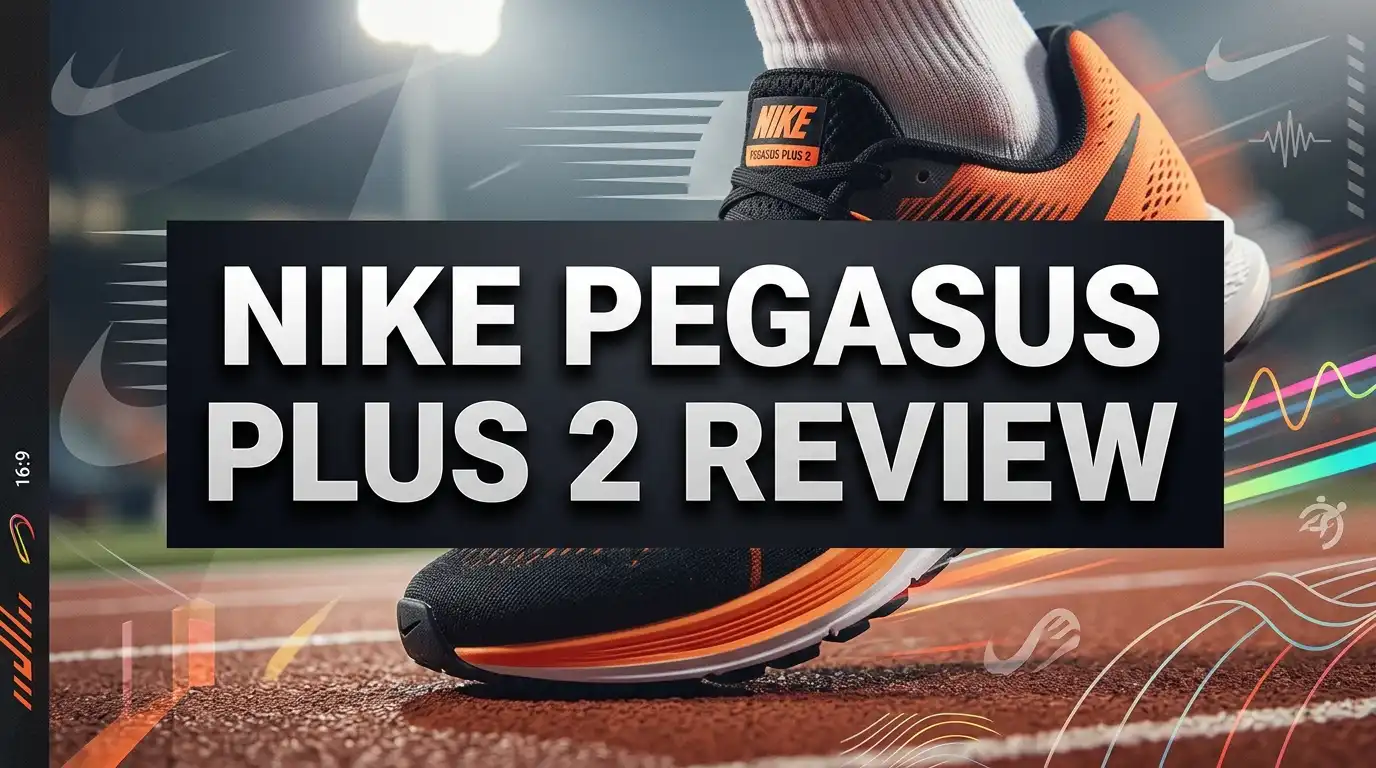
Nike Pegasus Plus 2 Review 2026: Is This Nike’s Best Value Speed Trainer?
Nike keeps promising a shoe that feels fast without costing race day money. The Pegasus Plus 2 might be the closest the brand has come in years.
This is the shoe runners have been begging for since the old Peg Turbo disappeared. It packs a full length ZoomX midsole, a visible Air Zoom unit in the forefoot, and a wider toe box that finally lets normal feet breathe. Nike claims 18 percent more energy return than version one.
But here is the honest question. Does it actually feel fast, or does it just look fast?
I dug through lab data, brand specs, and detailed wear tests from runners who logged real miles in this shoe. What follows is a complete breakdown of the ride, the fit, the flaws, and whether $165 is money well spent in 2026.
Keep reading. There are a few things Nike is not shouting about.
Key Takeaways
- The Pegasus Plus 2 costs $165 and releases August 30, 2026. That price sits well below most performance trainers, which now regularly cross the $200 line. Value is genuinely the strongest argument for this shoe.
- The midsole pairs full length ZoomX foam with a curved, exposed Air Zoom unit in the forefoot. Nike measures an 18 percent jump in energy return versus version one. Runners describe the pop as noticeable but not explosive.
- Stack height is 38 mm in the heel and 28 mm in the forefoot, giving a 10 mm drop. That drop is high by 2026 standards and favors heel strikers over forefoot strikers.
- Weight is 9.5 oz for a men’s size 10 and 8.0 oz for a women’s size 8. This is the biggest complaint from testers. A shoe marketed for speed work should weigh less.
- The new MR 10 2.0 last delivers a wider, higher volume toe box. Runners who always found Nike too narrow will notice the difference immediately. One reviewer called it the best fitting Nike trainer she has ever tested.
- This shoe works best as a daily trainer that can pick up the pace, not as a dedicated workout weapon. Treat it that way and you will love it.
Nike Pegasus Plus 2 Review 2026: The Short Verdict

- Take responsive cushioning to the next level with the Pegasus Plus
- It energizes your ride with full-length Superlight ZoomX foam to give you a high level of energy return for everyday...
Last update on 2026-08-21 / Affiliate links / Images from Amazon Product Advertising API
The Nike Pegasus Plus 2 is a very good shoe wearing a slightly misleading label.
Nike markets it as a tempo trainer built for fast sessions. In practice, it behaves like an excellent daily trainer with a fun forefoot. That distinction matters a lot depending on what sits in your rotation already.
The ride feels smooth and lively. ZoomX foam absorbs the landing, the Air Zoom unit adds a small push at toe off, and the transition between the two feels natural once you settle into a rhythm. Miles disappear easily in this shoe.
Where it falls short is weight. At 9.5 oz for a men’s size 10, the Pegasus Plus 2 carries more mass than most trainers pitched at speed. You feel that mass the moment you drop below threshold pace.
The fit, though, is a genuine win. Nike widened the forefoot and tightened the midfoot lockdown at the same time. Runners with average or slightly wide feet finally get a Nike trainer that does not pinch.
Then there is the price. At $165, this shoe undercuts the Superblast, the Vomero Premium, and nearly every super trainer on the wall. That single number rescues a lot of small complaints.
Grade it as a daily trainer and it earns an easy A. Grade it as a workout shoe and it lands closer to a B.
What Is New in the Nike Pegasus Plus 2
Version one and version two barely feel related. The changes run deeper than a typical yearly refresh.
The headline update is the exposed forefoot Air Zoom unit. Version one had no Air unit at all. This one uses a curved bag that sits visible in the outsole, which Nike says lets the air deform and expand more freely under load.
That curve is intentional. Air bags are rigid, and a flat bag can create a jarring handoff from soft foam to stiff plastic. The curved shape smooths that transition through your stride.
Nike also tunes the unit by shoe size. Sizes below a women’s 7.5 get a 9.5 mm bag at 15 psi. Sizes from women’s 8 to men’s 10.5 get an 11.5 mm bag at 15 psi. Men’s 11 and above get 11.5 mm at 20 psi.
Bigger runners get more pressure. Smaller runners get less. Everybody should feel a similar sensation.
The ZoomX itself changed too. Version one used a dense, firm PEBA blend that felt like an old school trainer. Version two uses a softer, more resilient formulation that actually behaves like premium foam.
Stack height climbed from 34/24 mm to 38/28 mm. The upper switched to the MR 10 2.0 last borrowed from the Pegasus 42. Nike also modernized the waffle outsole and trimmed rubber where it was not needed.
Nike Pegasus Plus 2 Specs, Price, and Release Date
Here are the numbers that define this shoe.
Weight comes in at 9.5 oz or 270 g for a men’s size 10, and 8.0 oz or 226 g for a women’s size 8. Larger sizes climb quickly, with a men’s 12 hitting roughly 11 oz.
Stack height measures 38 mm in the heel and 28 mm in the forefoot. That produces a 10 mm heel to toe drop, which is traditional Nike territory and higher than most modern performance trainers.
Midsole is full length ZoomX, a PEBA based foam, combined with the curved forefoot Air Zoom unit. Upper is an engineered mesh built on the MR 10 2.0 last with an integrated midfoot lacing band.
Outsole uses a modernized waffle rubber pattern with generous coverage, plus a section of exposed midsole through the middle of the shoe.
Price is $165 at retail. Some outlets list $170 depending on colorway and region. Canadian listings appeared around CAD 210.
Release date is August 30, 2026, through nike.com and select retail partners. Style code IM2541 covers the launch colorways.
Shoe purpose is neutral daily training with uptempo capability. There are no medial posts, no guide rails, and no plate.
Compared to the $250 super shoes filling race day rotations, this spec sheet at this price looks genuinely competitive. Value is the story here.
Top 3 Alternatives for Nike Pegasus Plus 2

- Engineered woven upper
Last update on 2026-08-21 / Affiliate links / Images from Amazon Product Advertising API

- Responsive speed. ZoomX foam, Nike's lightest and most responsive foam, delivers our most energy return with every...
- Carbon-fibre Flyplate. The full-length carbon-fibre Flyplate increases efficiency and responsiveness.
Last update on 2026-08-21 / Affiliate links / Images from Amazon Product Advertising API

Last update on 2026-08-21 / Affiliate links / Images from Amazon Product Advertising API
The ASICS Novablast 6 is the bouncy, playful option. It weighs less than the Pegasus Plus 2, uses FF Blast Max foam, and delivers a springier ride for easy and moderate paces. Runners who want maximum fun per mile tend to prefer it.
The Nike Zoom Fly 6 is the aggressive option. It carries a carbon plate, a taller stack, and a much more assertive rocker. If you genuinely want a workout shoe rather than a daily trainer, this is the Nike model that fits that brief better.
The Nike Vomero Plus is the comfort option. It uses a huge slab of ZoomX for maximum cushioning and easily handles long, slow miles. Several reviewers argue the Vomero Plus is actually the Pegasus Plus 2’s biggest rival, because both live on the same wall at similar prices.
Try all three if you can. Foot shape and stride pattern decide these matchups more than spec sheets do.
Midsole Feel: ZoomX Foam Plus a Forefoot Air Zoom Unit
The midsole is where this shoe earns its personality.
Landing in the heel feels soft. The ZoomX compresses under your weight, absorbs the impact, and then rebounds without feeling mushy. It is moderately compliant and moderately resilient, which is exactly what you want from a trainer that logs daily miles.
Then you roll forward and meet the Air unit.
The sensation is distinct. You can feel a firm, springy platform under the ball of your foot that pushes back as you load it. One tester compared it to running on Newton lugs, which is an odd but accurate description.
It is a tap on the shoulder, not a shove. Nobody should expect Alphafly propulsion here. Nike almost certainly held back on purpose to avoid cannibalizing its own race day lineup.
There is one wrinkle. Some runners report a small disconnect between the soft rear foam and the rigid forefoot bag at midfoot landing paces. You notice a brief pause before the Air unit engages and sends you forward.
Heel strikers and forefoot strikers both get along with it fine. Runners who land flat notice it most.
The good news is that the effect fades as you speed up. Once you get onto your forefoot, the Air unit does its job well and the ride feels genuinely snappy.
Upper and Fit: A Roomier Toe Box at Last
Nike solved a complaint that runners have voiced for a decade.
The Pegasus Plus 2 uses the MR 10 2.0 last, first introduced on the Pegasus 42. It delivers more width and more vertical volume through the forefoot without turning the shoe into a slipper.
The practical result is that your toes can splay. Runners with average width feet report no pressure at the big toe or the pinky. Runners who normally size up in Nike can stay true to size here.
Midfoot fit improved too, and this matters more than it sounds. Version one had a loose, sloppy midfoot that let feet slide sideways on a narrow platform. One tester finished runs with burning feet caused by friction.
Version two fixes that with an integrated midfoot lacing band that pulls the upper snugly across the arch. Lockdown is secure at all paces.
The tongue is thin, gusseted, and held by a lace loop. It stays put. The heel counter is small and rigid with generous internal padding that wraps the ankle without blocking motion.
The mesh is on the thicker side. Comfort is excellent and sockless running is viable, but breathability could be better in hot weather.
One caution. Runners with genuinely narrow feet may find this upper too voluminous, even with the laces cinched down.
How the Pegasus Plus 2 Rides on Easy Runs
Easy runs are where this shoe quietly excels.
At relaxed paces, the ZoomX does most of the work. You touch down, the foam gives, and you roll forward onto the Air unit without thinking about it. The transition feels smooth and unhurried.
The early forefoot rocker helps here more than people expect. It nudges you into toe off rather than forcing you, which keeps recovery runs feeling easy instead of pushy.
Testers consistently describe the miles as clicking off effortlessly. That is high praise for a shoe wearing a speed label, because plenty of tempo trainers punish you at conversational pace.
Comfort is a real strength. The padded collar, secure midfoot, and roomy forefoot combine into a shoe you can wear straight out of the box for a full hour without break in issues.
The 10 mm drop actually helps at slow paces. Sitting back on your heels feels natural in this shoe, and heel strikers get plenty of foam to land on.
There is a limit though. This is not a max cushion recovery shoe. Runners coming off a marathon or logging genuinely heavy mileage weeks will still want something plusher underfoot.
Think of it as your five days a week trainer. It handles easy miles, steady miles, and long runs with equal competence.
Tempo Runs and Workouts: Is It Really a Speed Trainer?
This is where opinions split, and where Nike’s marketing gets ahead of the product.
At marathon pace, the Pegasus Plus 2 feels alive. Testers report the forefoot Air unit helping turnover, keeping the legs cycling, and making a moderate effort feel manageable. Marathon pace is the shoe’s sweet spot.
Push harder and the picture changes.
At threshold pace, the shoe does not become more responsive. It just becomes heavier feeling. One reviewer noted no additional pop between marathon effort and threshold effort, which is unusual for a shoe built around a propulsive element.
Intervals are a stretch. At 9.5 oz for a men’s 10, this shoe carries more weight than a modern speed trainer should. In 2026, racing shoes weigh 4 to 5 oz and performance trainers hover near 8 oz.
The 10 mm drop compounds the issue. Combined with a small heel bevel, the rear of the shoe feels slightly clunky at fast paces, especially for runners who land at the midfoot.
Here is the fair conclusion. The Pegasus Plus 2 can absolutely handle a tempo run. It does that job well and enjoyably.
It simply is not the shoe you reach for on a track workout day. Nike already sells better options for that.
Weight, Stability, and the 10 mm Drop
Three technical points deserve honest discussion before you buy.
Weight is the loudest criticism. Every reviewer who tested this shoe flagged it. The Air Zoom unit adds mass, the thicker upper adds mass, and generous outsole rubber adds more.
Nike could trim this easily. Lighter mesh and smarter rubber placement would likely save a full ounce without harming durability. Version three has obvious room to improve.
Drop sits at 10 mm, which is traditional Nike. Heel strikers will not notice a problem. Midfoot and forefoot strikers may feel the heel getting in the way, particularly because the heel bevel is small.
An 8 mm drop with a more generous bevel would smooth this out considerably. Several testers requested exactly that.
Stability is fully neutral. There are no posts, no guide rails, and minimal sole flaring in the rear.
The platform is narrow through the heel and extremely narrow through the midfoot. Rearfoot strikers who need side to side support may feel wobbly, similar to complaints raised about the Vaporfly 3.
The platform does widen at the lateral midfoot, which helps forefoot strikers and runners who land toward the outside edge. The forefoot rocker and Air unit provide gentle forward guidance.
Bottom line. Neutral runners are fine. Runners with genuine stability needs should look elsewhere.
Outsole Grip and Expected Durability
The outsole gets less attention than the midsole, but it performs well.
Nike modernized the waffle pattern for version two, adding flexibility and removing rubber that was not contributing. Coverage remains generous across the heel and forefoot.
Wet road traction is solid. Testers ran this shoe on rain soaked pavement with no slipping. The waffle lugs bite reliably on painted lines and wet asphalt, which is not always true of Nike outsoles.
Dry road grip is a non issue. The shoe holds corners and handles sudden pace changes without complaint.
Durability is a more nuanced conversation. There is a large section of exposed ZoomX through the midfoot, and testers noted mild wear in that area after roughly 25 miles.
That is normal for exposed foam and rarely becomes a structural problem. It just looks worn faster than you might like.
The true durability limit is the ZoomX midsole itself. PEBA foams deliver superb energy return but generally compress sooner than EVA or supercritical EVA blends.
Expect something in the range of 300 to 400 miles depending on your weight and running surface. That is average, not exceptional.
At $165, average durability is acceptable. At $220, it would sting. Price context matters here.
Nike Pegasus Plus 2 vs Pegasus Plus 1 vs Pegasus 42
Comparing these three clears up a lot of confusion.
Versus Pegasus Plus 1, version two is a massive upgrade. The original used a dense, firm ZoomX that felt nothing like premium foam. It had no Air unit, a sloppy midfoot, and a ride that many runners found forgettable.
Version two adds 4 mm of stack, a genuine forefoot Air unit, a far better foam formulation, and a completely redesigned upper. These shoes barely belong in the same product line.
The tradeoff is weight. Version one was nearly an ounce lighter. Both share the same 10 mm drop and the same small heel bevel.
Versus Pegasus 42, the Plus 2 is roughly 10 percent lighter and considerably more responsive. The Pegasus 42 uses ReactX foam with a full length Air unit, making it firmer, heavier, and more durable.
Choose the Pegasus 42 if you want a workhorse that lasts. Choose the Plus 2 if you want more energy return and a livelier feel.
Versus Vomero Plus, the Plus 2 is firmer, lower stacked, and more responsive. The Vomero Plus is softer and better for pure comfort miles.
Honestly, that Nike on Nike matchup may be the toughest call of all.
Pros and Cons of the Nike Pegasus Plus 2
Pros
- Excellent price at $165, undercutting nearly every comparable performance trainer on the market in 2026.
- The best fitting Nike trainer in years, thanks to the wider and higher volume toe box on the MR 10 2.0 last.
- Soft, resilient ZoomX cushioning that handles easy miles and long runs comfortably without feeling dead.
- Genuinely noticeable forefoot Air Zoom pop that adds fun at marathon pace and keeps turnover quick.
- Secure midfoot lockdown from the integrated lacing band, fixing the biggest flaw of version one.
- Reliable wet and dry traction from the modernized waffle outsole.
- Very comfortable out of the box with no break in period required.
Cons
- Heavy for a performance trainer at 9.5 oz for a men’s size 10, which limits its appeal for fast workouts.
- 10 mm drop with a small heel bevel creates a slightly clunky feel, especially for midfoot strikers.
- Narrow midfoot platform may feel unstable for heel strikers who need lateral support.
- Breathability is only average because the upper mesh is on the thicker side.
- Exposed midsole shows wear early, with visible scuffing after about 25 miles.
- Too voluminous for narrow feet, even with laces fully tightened.
- The exposed Air unit blends into the midsole color, wasting a great visual opportunity.
Who Should Buy the Nike Pegasus Plus 2
- Take responsive cushioning to the next level with the Pegasus Plus
- It energizes your ride with full-length Superlight ZoomX foam to give you a high level of energy return for everyday...
Last update on 2026-08-21 / Affiliate links / Images from Amazon Product Advertising API
This shoe fits some runners perfectly and frustrates others. Here is how to tell which group you belong to.
Buy it if you want one shoe that does most things well. The Pegasus Plus 2 handles easy runs, steady runs, long runs, and moderate tempo work without complaint. Runners with a single shoe rotation will get real value here.
Buy it if Nike shoes have always felt too narrow. The new last is a genuine change, not marketing language. Wide forefoot runners should try this one.
Buy it if you are a neutral heel striker. The high drop and generous heel stack suit that pattern well.
Buy it if $165 is your ceiling. Nothing else in this performance bracket delivers a PEBA midsole plus an Air unit at this price.
Skip it if you need a dedicated workout shoe. The weight holds it back and lighter options exist, including the Zoom Fly 6.
Skip it if you land at the midfoot or forefoot. The 10 mm drop and small bevel will annoy you.
Skip it if you have narrow feet or need stability features. The roomy upper and narrow platform work against you in both cases.
Sizing is straightforward. Order your normal size. Runners between sizes can comfortably choose either.
Frequently Asked Questions
When does the Nike Pegasus Plus 2 release?
The Pegasus Plus 2 releases on August 30, 2026, through nike.com and select retail partners. The launch style code is IM2541. Retail price is $165 in the United States, with some listings showing $170 depending on colorway.
How much does the Nike Pegasus Plus 2 weigh?
It weighs 9.5 oz or 270 g in a men’s size 10, and 8.0 oz or 226 g in a women’s size 8. Larger sizes climb noticeably, with a men’s size 12 measuring around 11 oz. This is heavier than most competing performance trainers.
Does the Nike Pegasus Plus 2 run true to size?
Yes. The Pegasus Plus 2 fits true to size for most runners. The MR 10 2.0 last provides a wider and higher volume toe box than previous Nike trainers. Runners with narrow feet may need to cinch the laces tighter than usual.
Is the Pegasus Plus 2 good for marathon training?
It works very well for marathon training. The shoe shines at easy paces and marathon effort, handling long runs and steady miles comfortably. Use a lighter shoe for track intervals and save this one for daily mileage and tempo work.
How long do Nike Pegasus Plus 2 shoes last?
Expect roughly 300 to 400 miles. The ZoomX midsole is the limiting factor, since PEBA foams compress faster than EVA blends. The outsole rubber holds up well, though the exposed midsole section shows cosmetic wear early.
Is the Pegasus Plus 2 better than the original Pegasus Plus?
Yes, significantly. Version two adds a forefoot Air Zoom unit, a softer and more resilient ZoomX formulation, 4 mm more stack height, and a far better fitting upper. The only regression is weight, since version two is nearly an ounce heavier.
Can you use the Pegasus Plus 2 for walking or gym work?
It is not ideal. The narrow midfoot platform and forefoot rocker are built for running motion, not standing or lateral movement. Choose a Pegasus 42 or Vomero for casual all day wear and general gym use.

Sara is a passionate lifestyle enthusiast and product researcher with over 5 years of experience in fashion, beauty, and wellness industries. With a keen eye for quality and a commitment to honest reviews, Sara has helped thousands of readers make smarter purchasing decisions. When she’s not testing the latest products, you can find her exploring new trends and sharing her discoveries with the Smart Selects community.