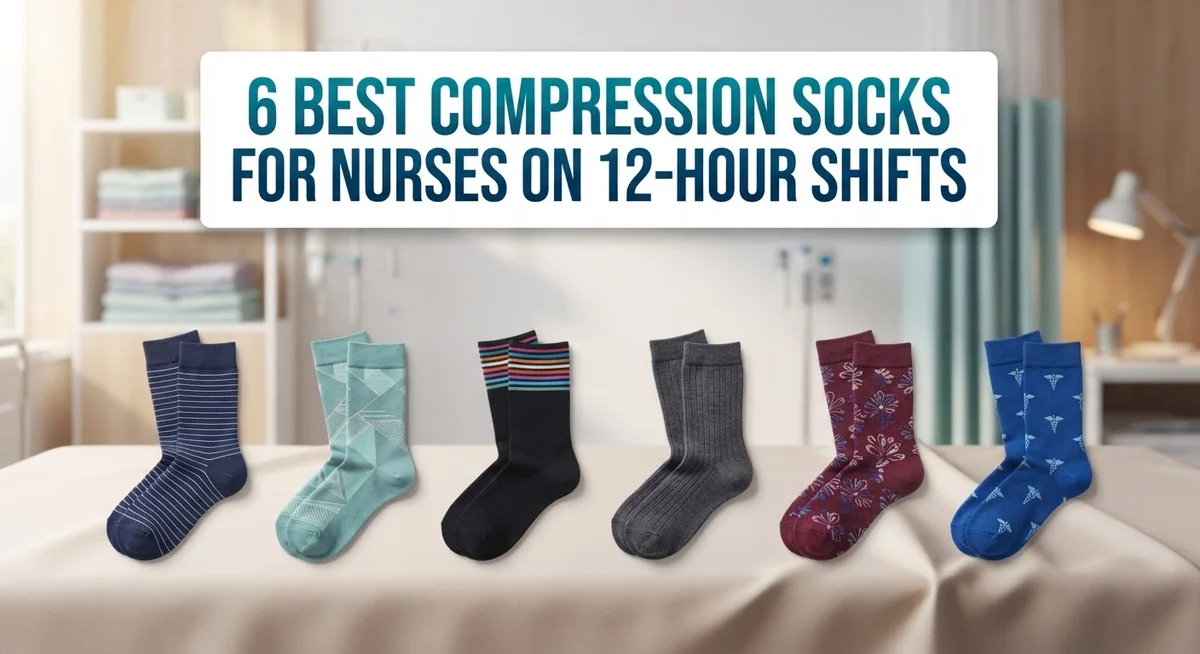
6 Best Compression Socks for Nurses on 12-Hour Shifts
Twelve hour shifts push your legs to the limit. Nurses walk, stand, and rush for hours without a real break.
By the end of your shift, your legs may feel heavy. Swelling and aching are common complaints among nurses.
Compression socks can change this. They boost blood flow and reduce fatigue in your legs and feet.
Many nurses trust graduated compression for long shifts. This design squeezes tighter at the ankle and loosens toward the knee.
That gentle pressure helps blood travel back to your heart. It also fights stiffness and soreness after standing all day.
Materials matter too. Merino wool and bamboo blends offer breathable, moisture wicking comfort.
Some socks feel too tight or synthetic. Others fit perfectly and feel great from morning to night.
Below, you will find our six best compression socks for nurses on twelve hour shifts. Each pick fits different needs, styles, and comfort levels.
Let’s help your legs feel as strong as you are, shift after shift.
How We Chose Our Top Picks
We evaluated each pair through the lens of what nurses actually need during grueling 12 hour shifts. Our selection process focused on real world performance on hospital floors, in emergency departments, and during long clinical rotations.
We examined compression levels to ensure they match different shift intensities. Standard 15–20 mmHg works for most floor nurses. Higher 20–30 mmHg compression suits ICU and ER environments where leg fatigue runs deepest.
Material quality separated the winners from the rest. Merino wool and bamboo blends beat synthetic alternatives because they breathe, wick moisture, and don’t cut into your skin after hours of wear. We prioritized socks that stay comfortable from clock in to clock out.
Build quality mattered too. Graduated compression that actually works, targeted heel support, and seams that won’t irritate matter when you’re standing all day. We looked at durability so your socks survive repeated washing and wearing.
Every pick on this list has proven itself with nurses who depend on their legs. These are socks that perform when it counts most.
1. Apolla Performance Crew

- TARGETED COMPRESSION: The Performance are patented crew socks that offer 20-30 mmHg which is optimal to increase...
- CUSHIONS FOR YOUR FEET: Apolla socks have knit-in energy absorption pads in the heel and ball of the foot. This may...
Last update on 2026-08-28 / Affiliate links / Images from Amazon Product Advertising API
Apolla Performance Crew socks deliver 20–30 mmHg compression built for nurses who log serious floor time. These crew-height socks sit perfectly between your shoe and scrub pants, making them ideal for medical-surgical and general floor nursing.
The standout feature is their targeted compression zone that focuses pressure on your calves and ankles where fatigue hits hardest. This graduated design keeps blood flowing upward without that restrictive, synthetic feel some compression socks carry.
Build quality here is solid and reliable. The fabric holds its compression through wash after wash, and nurses report the socks stay put during 12-hour shifts without slipping or rolling down.
Real-world performance speaks for itself—Apolla earns a 4.74-star rating because it actually reduces leg swelling and heaviness by shift’s end. Many nurses choose this pair specifically because it balances serious compression with everyday wearability.
Pros
- Delivers strong 20–30 mmHg compression ideal for extended shifts
- Targeted heel and calf support reduces fatigue and swelling
- Stays in place all shift without rolling or sliding
- Crew height works seamlessly under scrubs
Cons
- May feel snug on first wear; takes one or two shifts to adjust
- Limited color options compared to other brands
- Not ideal if you prefer ankle-height socks
2. Sockwell Circulator

- RECOMMENDED FOR: All day/everyday wear, flying and travel, prolonged sitting or standing, exercise, recovery, and...
- 4 ZONES OF MODERATE (15-20 mmHg) GRADUATED COMPRESSION: helps to minimize swelling and reduce fatigue. Energizes legs...
Last update on 2026-08-25 / Affiliate links / Images from Amazon Product Advertising API
Sockwell Circulator socks bring merino wool construction to nurses who want breathability without the synthetic feel. This brand is known as the gold standard for compression socks because it delivers comfort that lasts through your entire 12-hour shift.
The standout feature is how these socks don’t cut into your skin like cheaper models do. Sockwell engineered a design that compresses effectively while letting your legs breathe, which matters when you’re on your feet for hours.
Build quality here is exceptional—merino wool resists odor and moisture naturally. Your feet stay dry and fresh even during back-to-back shifts without the clammy synthetic feeling.
Real-world performance speaks loud among floor nurses. The graduated compression supports your calves and ankles where fatigue hits hardest, and wearers report noticeably reduced swelling by shift end.
Pros
- Merino wool material feels soft and natural against skin
- Doesn’t cut off circulation or leave painful marks
- Effectively reduces leg swelling and fatigue on long shifts
- Moisture-wicking keeps feet dry and fresh
Cons
- Merino wool requires gentle care to maintain quality
- May feel slightly warmer than synthetic blends in summer months
3. Comrad Compression Socks

- All-Day Support: With 15-20 mmHg of True Graduated Compression, Comrad Nylon Knee-High Compression Socks offer all-day...
- Size: These unisex socks in size Medium fit a Women’s shoe size 8-10.5 and a Men’s 8.5-10, with a calf circumference...
Last update on 2026-08-25 / Affiliate links / Images from Amazon Product Advertising API
Comrad Compression Socks stand out as the preferred choice for extended shifts when your legs need serious support. These socks deliver graduated compression that works with your body’s natural circulation to fight fatigue and swelling.
The standout feature is how Comrad focuses on all-day comfort without sacrificing performance. You get compression where you need it most—calves and ankles—while the sock stays put throughout your entire 12-hour shift.
Build quality here is solid and thoughtful. Comrad designs these socks specifically for people who spend long hours on their feet, so materials and construction reflect real nursing demands.
Real-world performance proves it. Nurses report that Comrad socks keep legs feeling fresher at the end of a long shift, with noticeable reduction in swelling and that heavy, achy feeling.
Pros
- Graduated compression targets fatigue in calves and ankles
- Stays in place all shift without rolling or sliding
- Designed specifically for extended-shift demands
- Reduces leg swelling and heaviness by end of shift
Cons
- May feel snug initially until you break them in
- Limited style variety compared to other brands
4. VIM & VIGR Compression Socks

- ENERGIZE YOUR LEGS Using integrally-knit graduated compression, our compression socks apply therapeutic pressure that...
- ALLEVIATE ACHINESS & HEAVINESS By squeezing the legs from the bottom up, our legwear can help INCREASE CIRCULATION of...
Last update on 2026-08-25 / Affiliate links / Images from Amazon Product Advertising API
VIM & VIGR Compression Socks bring stylish designs to nurses who refuse to sacrifice looks for function. These socks deliver graduated compression that keeps your legs feeling fresh through those grueling 12-hour shifts.
The standout feature is how VIM & VIGR combines fashionable patterns with genuine compression support. You get real graduated compression technology without looking like you’re wearing medical-grade gear under your scrubs.
Build quality here is solid and thoughtful—these socks hold their shape shift after shift. Real-world performance speaks for itself; nurses consistently report reduced leg fatigue and swelling by end of day.
The compression level works well for standard floor shifts, though it may not match the intensity of higher mmHg options. VIM & VIGR proves you don’t have to choose between looking good and feeling supported.
Pros
- Stylish, modern designs that don’t scream “medical compression”
- Graduated compression effectively reduces leg swelling and fatigue
- Comfortable fit that doesn’t cut off circulation or leave marks
- Durable construction holds up through repeated washing
Cons
- Compression level is moderate; may not be intense enough for ER or ICU shifts
- Style variety, while attractive, is more limited than some competitors
5. Figs Compression Socks

- 【Size Tips】: Choose according to your CALF size first as for 20-30 mmHg. One size smaller if need tighter...
- 【Moisture-Wicking & Breathable】: These athletic compression socks are made of high-performance fabrics with...
Last update on 2026-08-25 / Affiliate links / Images from Amazon Product Advertising API
Figs Compression Socks bring healthcare-specific engineering to nurses who spend their entire shift on their feet. These socks are built by a brand that understands exactly what medical professionals need during grueling 12-hour rotations.
The standout feature is how Figs designs these socks specifically for healthcare workers—not just generic athletes or travelers. Build quality reflects this focus, with thoughtful construction that supports your legs without feeling like a medical device you’re forced to wear.
Real-world performance shines during extended shifts when your legs start to feel heavy and swollen. Graduated compression targets your calves and ankles where fatigue hits hardest, helping maintain circulation when you’re constantly moving between patient rooms.
Many nurses appreciate that Figs combines professional credibility with actual compression support. You get the functional benefits of 20–30 mmHg compression wrapped in socks designed by people who know hospital life firsthand.
Pros
- Healthcare-brand credibility and shift-specific design
- Graduated compression effectively reduces leg swelling and fatigue
- Professional appearance fits seamlessly into scrub culture
- Maintains comfort during full 12-hour shifts
Cons
- Limited style variety compared to fashion-forward brands
- May feel snug during your first few wears until broken in
- Higher compression levels may not suit shorter shifts or lighter duty roles
6. Bombas Compression Socks

Last update on 2026-08-25 / Affiliate links / Images from Amazon Product Advertising API
Bombas Everyday Compression Socks deliver reliable support for nurses managing standard floor shifts. These socks excel at combining everyday wearability with genuine compression benefits that keep your legs feeling fresher throughout your shift.
The standout feature is how Bombas focuses on all-day comfort without making you feel like you’re wearing medical gear. Build quality here is consistently solid—the fabric holds up through repeated washing and maintains its compression integrity shift after shift.
Real-world performance shines during those moments around hour 8 when leg fatigue typically kicks in. Graduated compression targets swelling in your calves and ankles, helping you finish your shift without that heavy, achy feeling that comes from standing for 12 hours.
The fit remains comfortable without cutting into your skin or leaving compression marks on your legs. Many nurses appreciate that these socks feel like regular socks while still delivering legitimate compression support.
Pros
- Comfortable fit that feels natural to wear all shift long
- Effective graduated compression reduces leg swelling and fatigue
- Durable construction withstands frequent washing and daily use
- Clean, understated design blends seamlessly with scrubs
Cons
- Compression level may not be intense enough for ICU or ER-level demands
- Limited color and pattern options compared to fashion-forward brands
What to Look For Before You Buy
Compression level matters most for your 12 hour shifts. Standard floor work typically needs 15 to 20 mmHg compression. Emergency departments and intensive care units benefit from 20 to 30 mmHg instead. Higher compression means stronger support when you’re on your feet for the entire shift.
Material choice affects how your feet feel after hours of walking. Merino wool breathes well and keeps moisture away from your skin. Bamboo fabric offers similar moisture wicking with a softer touch. Avoid purely synthetic materials because they trap sweat and create discomfort during long shifts.
Graduated compression works by being tightest at your ankle and gradually loosening toward your calf. This design pushes blood upward and reduces the pooling that causes swelling and heaviness. Look for socks that specifically mention graduated compression on the label.
Fit and construction prevent circulation problems. The sock should feel snug but never cut into your skin or leave marks after you remove them. Check that the heel area has targeted support since nurses put constant pressure there. Quality stitching ensures the sock maintains its shape through dozens of wash cycles.
Calf height varies between options. Crew length socks cover your mid calf and work well for most floor nurses. Quarter or ankle height socks work if you prefer less coverage.
Check customer reviews from actual healthcare workers before buying. Real nurses describe whether socks hold compression after multiple washes, how they feel during hour 10 of your shift, and if they stay in place without sliding down. These details matter more than marketing claims.
How to Choose the Right One
Choosing the right compression socks requires you to focus on a few key factors that directly impact your comfort during those demanding 12 hour shifts.
Compression level is your starting point. Standard floor nursing typically calls for 15–20 mmHg. If you work in the ER, ICU, or spend most of your shift on your feet, bump up to 20–30 mmHg for stronger support. Higher compression means better circulation and less swelling by hour 11.
Material makes a real difference in how your feet feel. Merino wool and bamboo both wick moisture away from your skin, keeping your feet dry and comfortable. Synthetic materials can feel hot and clingy after hours of wear. Look for options that avoid that plastic sensation against your skin.
Graduated compression is the feature that actually works. These socks are tightest at your ankle and gradually loosen as they move up your calf. This design pushes blood back to your heart and prevents pooling in your legs, which is exactly what causes that heavy, achy feeling.
Fit and construction prevent problems. Socks that cut into your skin or leave marks defeat the purpose. Your compression socks should feel snug but not restrictive. Check what calf height works for you—crew length covers more of your leg, while shorter options pair easily with different shoe styles.
Read reviews from actual nurses. Real healthcare workers share honest feedback about how socks perform during real shifts. Look for comments about durability after frequent washing and whether the fit holds up throughout your workday.
Final Verdict
Picking the best compression socks comes down to your shift type and personal comfort needs. Nurses on med-surg floors often love the Apolla Performance Crew. Its 20-30 mmHg support handles long walking hours well.
For nurses who deal with sensitive skin, Sockwell stands out as a trusted option. The merino wool blend feels soft against skin. It won’t dig into your calves after hour ten.
If your shifts stretch beyond twelve hours, Comrad Compression Socks offer solid support built for that extra strain. Many ICU and ER staff turn to these when regular options fall short.
Nurses who care about style still have great choices too. VIM & VIGR brings graduated compression into fun patterns and colors. You get support without sacrificing personality.
For those who prefer natural fabrics, Dr Woof Apparel’s Merryl Stripe uses bamboo fibers that pull moisture away fast. Your feet stay dry through back-to-back patient rounds.
Healthcare-specific brands like Figs design socks with nurses in mind from the start. The fit feels purposeful rather than generic.
Every pair on this list tackles the same core problem. Your legs need support during long shifts on hard hospital floors. The right pick depends on how your body responds to pressure and fabric type.
Try a few options if you can. Your feet will tell you which pair earns a permanent spot in your scrub bag. Comfort during a twelve hour shift isn’t something to guess on. Test, compare, and trust what actually works for your body.
Frequently Asked Questions
How long do compression socks last with daily nursing use?
Quality compression socks hold their elasticity for 6 to 12 months with regular washing and care. Merino wool options like Sockwell tend to last longer because the fibers resist breakdown. Bamboo blends also perform well but may lose compression slightly faster. Washing in cold water and air drying extends their life. Most nurses replace their pairs annually or when they notice the compression feeling looser.
Can I wear compression socks if I have sensitive skin?
Yes, but material choice matters greatly. Merino wool and bamboo are gentler on sensitive skin than synthetic blends. Sockwell stands out here because their socks don’t cut into skin or leave marks. Avoid models with tight elastic bands that dig in. If you experience itching or irritation, switch to natural fiber options and wash new socks before first wear.
What compression level should I choose for a 12-hour shift?
Standard floor nursing works well with 15–20 mmHg compression. If you work in the ER or ICU with constant movement, jump to 20–30 mmHg for extra support. Higher compression feels tighter but reduces swelling and fatigue more effectively. Start with 15–20 mmHg and upgrade if your legs still ache after shifts. Your shift type and how your legs feel matter most here.
Do compression socks really reduce leg swelling?
Absolutely. Graduated compression works by being tightest at your ankle and gradually loosening toward your calf. This design pushes blood upward and prevents fluid from pooling in your feet. Nurses report noticeably less swelling and aching after wearing them consistently. The effect builds over time, so wear them regularly for best results.
Should I size up or down in compression socks?
Fit matters as much as compression level. Socks that are too tight cut off circulation and defeat the purpose. Socks that are too loose won’t compress properly. Follow the brand’s sizing chart carefully and measure your calf and foot as instructed. Read reviews from actual nurses about fit before ordering, since sizing varies between brands.

Sara is a passionate lifestyle enthusiast and product researcher with over 5 years of experience in fashion, beauty, and wellness industries. With a keen eye for quality and a commitment to honest reviews, Sara has helped thousands of readers make smarter purchasing decisions. When she’s not testing the latest products, you can find her exploring new trends and sharing her discoveries with the Smart Selects community.